




Corneal ulcers in dogs, cats, rabbits …
Corneal ulcers in dogs and cats
The corneal ulcers are lesions of the cornea, the transparent surface of the eye, which can be painful and potentially serious if not treated promptly. In dogs and cats, these conditions are common and require accurate diagnosis and appropriate treatment to avoid complications that can lead to loss of vision.
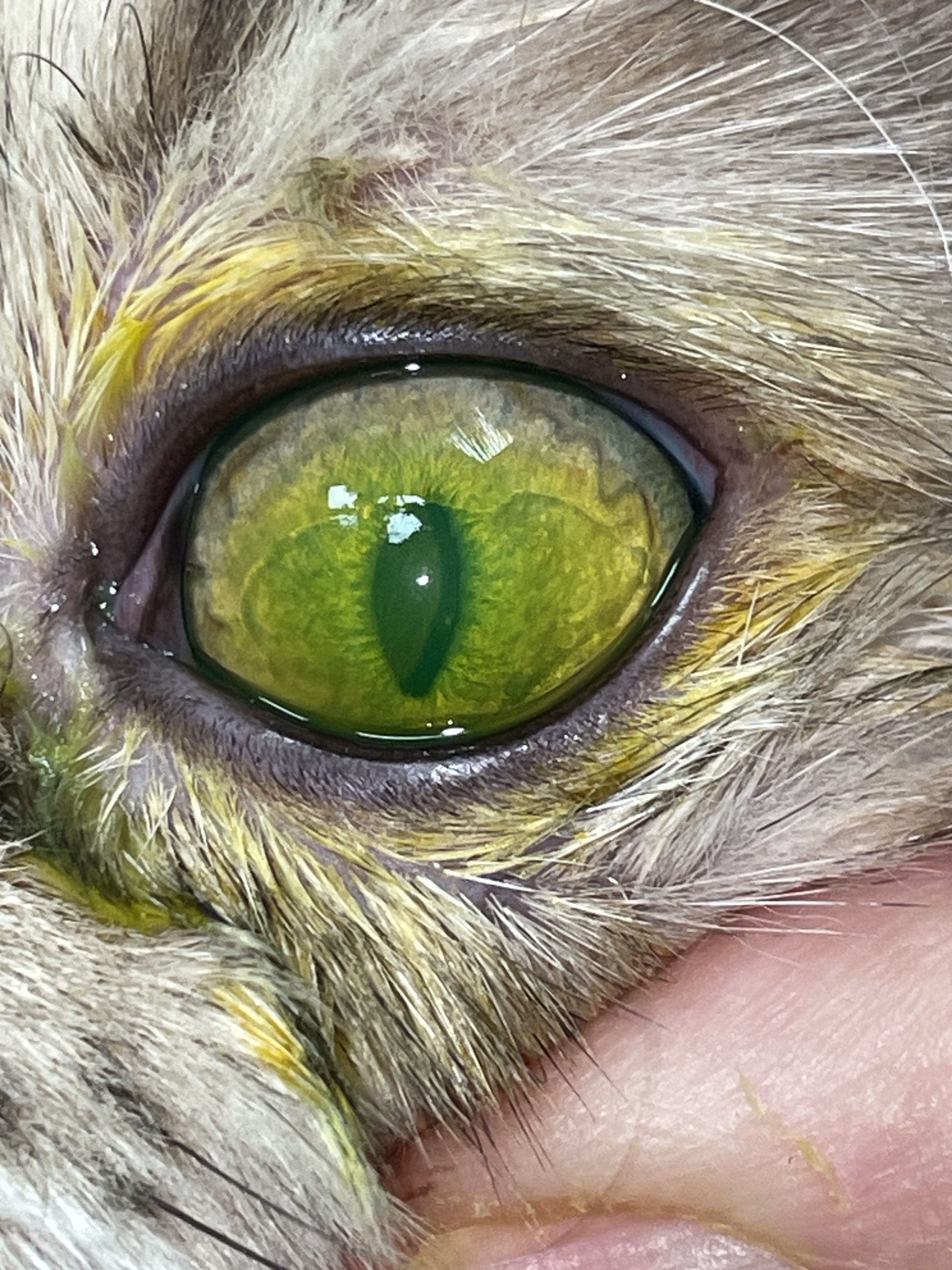

Causes and symptoms of corneal ulcers
What causes corneal ulcers?
Ulcers can have several origins:
Trauma (scratches, bumps, foreign bodies)
Dry eyes (keratoconjunctivitis sicca)
Bacterial or viral infections (such as feline herpes virus in cats)
Eyelid abnormalities (entropion, distichiasis, ectopic eyelashes rubbing against the cornea)
Healing defects (indolent ulcers)
Some corneal ulcers can be complicated by keratomalacia, a purulent melting of the cornea, which can spread to the entire cornea and lead to permanent loss of the eye.
What are the signs of a corneal ulcer?
An animal suffering from a corneal ulcer may present :
- A red, painful eye
- Excessive watering
- Increased sensitivity to light
- Frequent blinking or keeping the eye closed
- Loss of corneal transparency (white or bluish appearance)
In certain brachycephalic breeds, a corneal ulcer can worsen in a matter of hours, rapidly progressing to perforation, a particularly serious complication requiring emergency treatment.
Surgical management of corneal ulcers
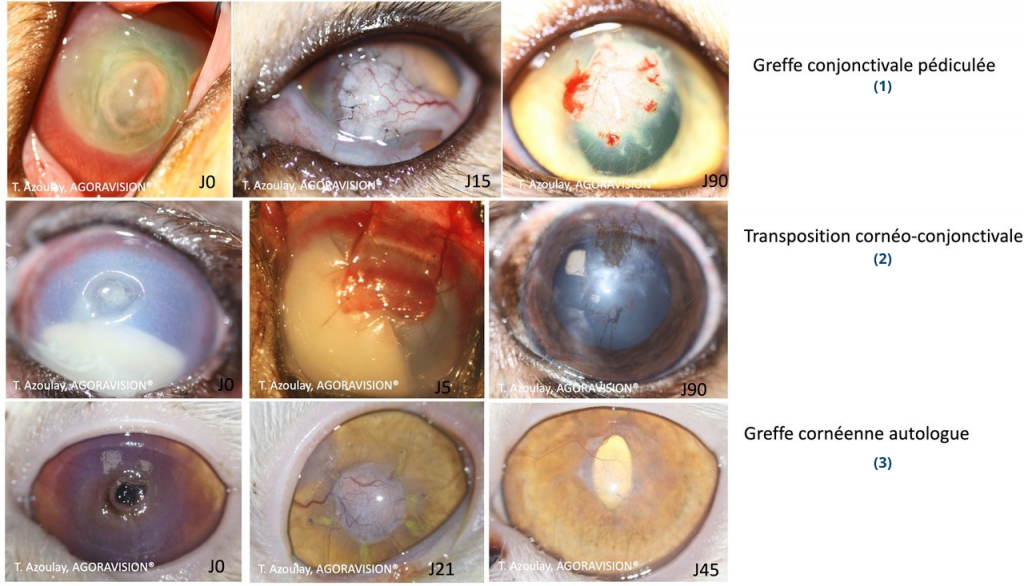
Treatment of corneal ulcers depends on their type and severity. When a patient is referred to us, it's usually because the medical treatment already in place has been unable to bring about healing. In the majority of cases, the ulcers we treat are already advanced or complicated, requiring surgical treatment to avoid irreversible complications, such as corneal perforation or loss of the eye.
Surgery removes the infected or atonic portion of the cornea(superficial keratectomy) and, if necessary, restores the eye's integrity with a corneal graft (2 & 3) or conjunctival flap (1).
At Agoravet, we are committed to offering the best possible chance of visual recovery, with the emphasis on transparent corneal grafting techniques that preserve the animal's vision as much as possible.
Service news
Veterinary ophthalmology conference in Thionville: presentation by Dr Azoulay
Dr Azoulay, a veterinary specialist in ophthalmology at Agoravet, spoke at a conference in Thionville, organized as part of his […]
Read moreClinicat 2026-2027
Will you soon be graduating in veterinary medicine and want to start your career in a 𝗮𝗽𝗽𝗿𝗲𝗻𝗮𝗻𝘁 and 𝘀𝘁𝗶𝗺𝘂𝗹𝗮𝗻𝘁 environment?📍 […]
Read more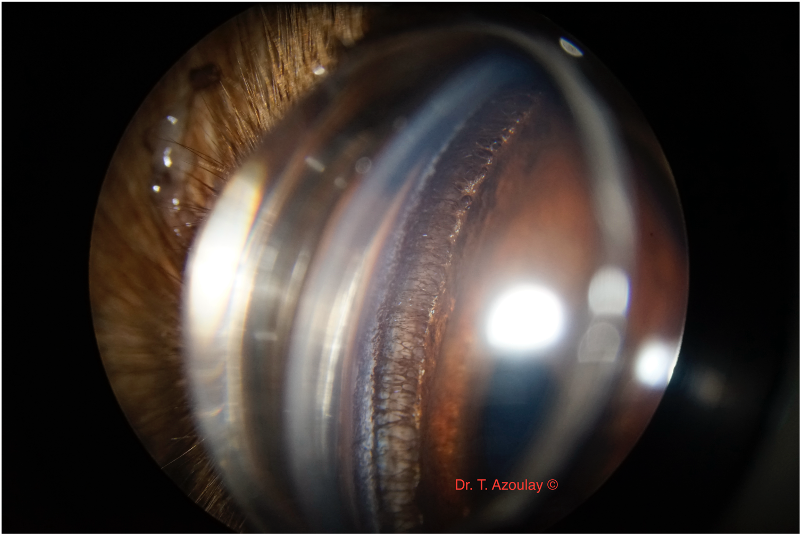
Dr Azoulay’s presentation at AFVAC 2025
Dr Thierry Azoulay, from the Department of Ophthalmology, will present a lecture at AFVAC 2025:” Glaucoma in dogs: when to […]
Read more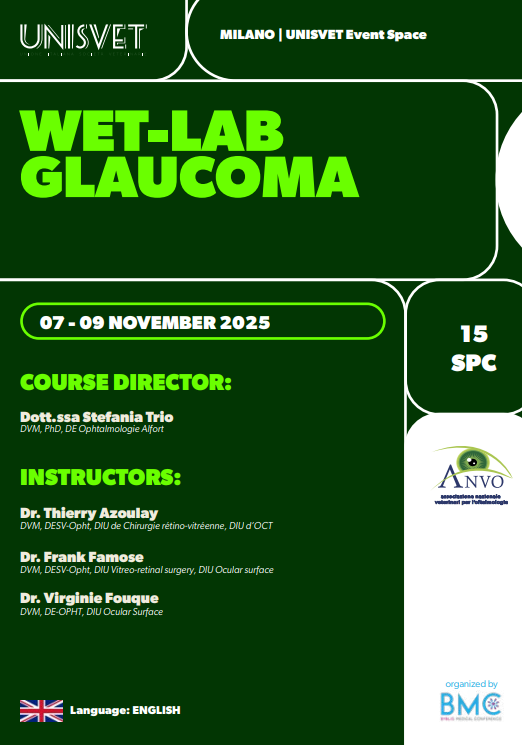
Dr Thierry Azoulay to host an international conference on veterinary glaucoma in Milan
We are proud to announce that Dr Thierry Azoulay, head of theAgoraVision ophthalmology department , will be an instructor at […]
Read more