




Panosteites
Dog panosteitis
Panosteitis is a disease of the growing dog between 5 and 15 months of age, mainly affecting the long bones of the skeleton, such as the femur, tibia, humerus, ulna or radius. It causes severe pain and sometimes fever. Dogs are usually downcast, may have difficulty moving and may limp. It mainly affects large-breed dogs such as Beaucerons, Dobermanns, Belgian Shepherds, Bernese Mountain Dogs, Rottweilers, Leonbergers, Pyrenean Mountain Dogs, etc. A hereditary cause is suspected but not proven. A relationship between the onset of panosteitis and a diet too rich in protein during puppyhood is also suspected.
How can I tell if my dog has panosteitis?
Direct examination of your pet may point to this condition. Palpation of the bones can be very painful in certain places, which is highly suggestive. The definitive diagnosis is made on the basis of radiographic examinations. Characteristic lesions may indeed be present, but not systematically. In case of doubt, it is advisable to repeat the examination after 15 days. There is no correlation between the size of the lesions and the pain they cause. Very discreet lesions may be responsible for severe pain, and vice versa.
How do I treat my dog's panosteitis?
Treatment of panosteitis is essentially pain management, with drugs such as analgesics and anti-inflammatories. Resting the animal can also provide relief until the pain disappears.
Can my dog recover from panosteitis?
Symptoms usually disappear on their own as the animal matures. The prognosis is often favourable, provided there are no other associated problems such as elbow dysplasia or shoulder osteochondritis.

Main orthopedic anomalies
Osteoarthritis and arthritis
Osteoarthritis and arthritis in dogs, cats and NACs Osteoarthritis is a degenerative joint disease. It evolves chronically, and can affect […]
Read moreDislocations
Dislocations in dogs, cats and NACs Dislocations are abnormal displacements of a bone that partially or totally protrude from its […]
Read moreOsteochondrosis
Osteochondrosis and osteochondritis dissecans in dogs This condition affects the cartilage of certain joints in dogs. Its origin remains uncertain, […]
Read moreFractures
Fracture management What is a fracture? A fracture is a break or crack in a bone. It can occur as […]
Read moreAnomalies of the cruciate ligaments
Cruciate ligament rupture in dogs This anomaly concerns the knee and is mainly found in dogs, but also occasionally in […]
Read moreElbow dysplasia
What is elbow dysplasia? Elbow dysplasia is an anomaly that runs in families and affects certain medium-sized to large dogs. […]
Read more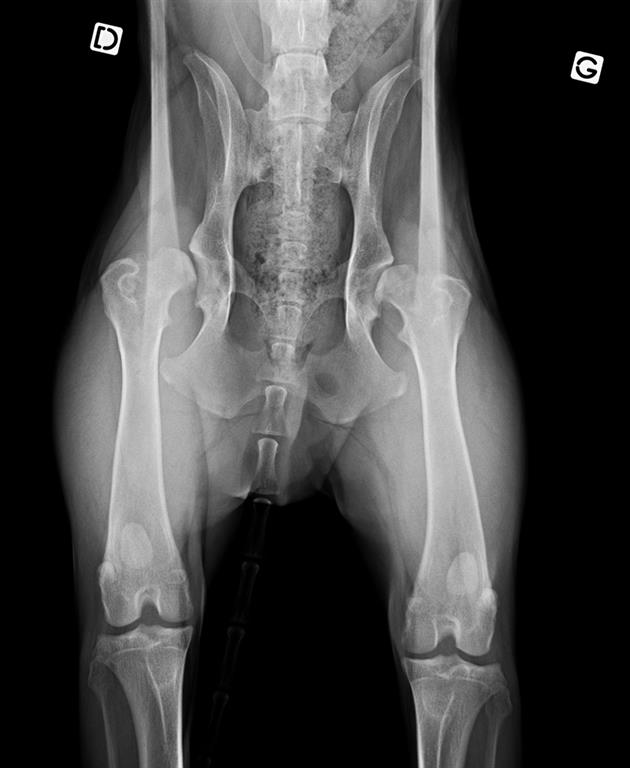
Hip dysplasia
Hip dysplasia in dogs and cats Hip dysplasia is a disease of the dog and cat that affects the joint […]
Read more