




Fracture management
What is a fracture?
A fracture is a break or crack in a bone. It can occur as a result of trauma, such as an accident or fall, or due to certain medical conditions that weaken the bones.
What are the signs that my pet may have a fracture?
Common signs of fracture include lameness, intense pain, swelling, deformity of the affected area, and sometimes bleeding. Your pet may also refuse to move or use the injured limb. In the case of vertebral fractures, paralysis of the limbs may occur.
What should I do if I suspect my pet has a fracture?
If you suspect your pet has a fracture, it's crucial to take him to the vet immediately. To avoid aggravating the situation, avoid excessive handling of the injured area.
How soon should a fracture be treated?
Some fractures require urgent surgical treatment, otherwise chances of recovery are compromised. These include vertebral fractures, open fractures and joint fractures.
In other cases, treatment time will depend on the animal's condition. Fractures are often the result of accidents involving multiple traumas. In such cases, it is important to stabilize the animal before repairing the fracture under anesthesia. In the event of a limb fracture, immobilization is necessary pending surgery, to prevent the fracture worsening and reduce the animal's pain.
How is a fracture diagnosed?
The diagnosis of a fracture is usually made by a clinical examination followed by X-rays or CT scans. These images show the location and severity of the fracture, helping to determine the best treatment plan.
What are the treatment options for fractures in animals?
Treatment may vary depending on the severity and location of the fracture. It may include immobilization of the bone with splints, or in some cases, surgery to place pins, plates or screws.
Is surgery always necessary to treat a fracture?
No, surgery is not always necessary. Some fractures can be treated with external immobilization, such as splints or casts. However, complex or displaced fractures may require surgical intervention for proper healing.
How do you recover from a fracture?
Recovery depends on the severity of the fracture and the treatment applied. It generally includes a period of strict rest, regular monitoring, and sometimes physiotherapy.
What are the possible risks and complications of fracture treatment?
Risks can include infections, bone healing problems, or complications associated with immobilization, such as muscle atrophy. Regular veterinary supervision is essential to minimize these risks and correct any abnormalities as soon as possible.
How long does it usually take for a fracture to heal?
Healing time varies according to the severity of the fracture and the age of the animal. In general, it can take from several weeks to a few months. Younger animals tend to heal faster than older ones.
Main orthopedic anomalies
Osteoarthritis and arthritis
Osteoarthritis and arthritis in dogs, cats and NACs Osteoarthritis is a degenerative joint disease. It evolves chronically, and can affect […]
Read moreDislocations
Dislocations in dogs, cats and NACs Dislocations are abnormal displacements of a bone that partially or totally protrude from its […]
Read morePanosteites
Dog panosteitis Panosteitis is a disease of the growing dog between 5 and 15 months of age, mainly affecting the […]
Read moreOsteochondrosis
Osteochondrosis and osteochondritis dissecans in dogs This condition affects the cartilage of certain joints in dogs. Its origin remains uncertain, […]
Read moreAnomalies of the cruciate ligaments
Cruciate ligament rupture in dogs This anomaly concerns the knee and is mainly found in dogs, but also occasionally in […]
Read moreElbow dysplasia
What is elbow dysplasia? Elbow dysplasia is an anomaly that runs in families and affects certain medium-sized to large dogs. […]
Read more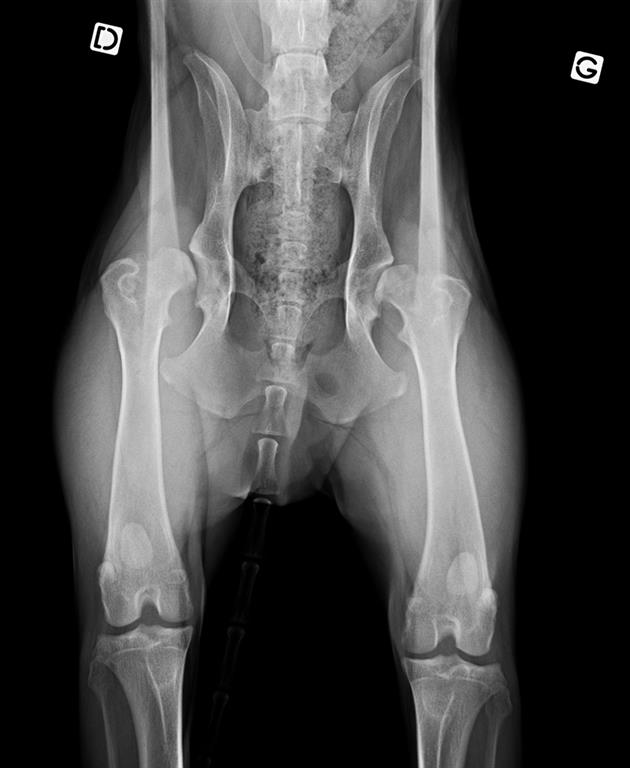
Hip dysplasia
Hip dysplasia in dogs and cats Hip dysplasia is a disease of the dog and cat that affects the joint […]
Read more