




The medical scanner
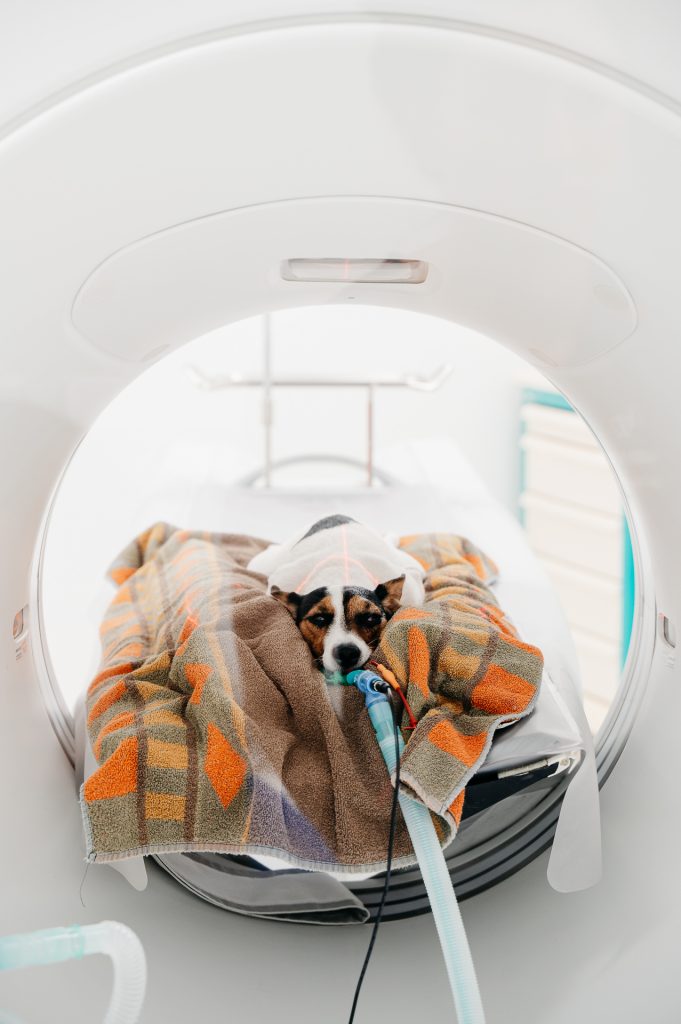
The veterinary medical scanner is an advanced imaging technique that provides highly accurate cross-sectional images of the body’s internal structures. It is particularly useful for exploring complex pathologies affecting bones, joints, thoracic and abdominal organs, as well as certain neurological disorders.
Thanks to detailed images and 3D reconstruction, the scanner provides an in-depth view of anatomical structures, making it easier to identify anomalies and optimize surgical or medical treatments.
When is a CT scan indicated?
Orthopedic and joint pathologies
The CT scan is a key examination for assessing bone and joint injuries such as :
- Complex fractures and microfractures
- Elbow and hip dysplasia
- Bone tumors and cysts
- Arthrosis and joint damage
Thoracic and abdominal exploration
CT imaging provides a precise view of internal organs, facilitating the diagnosis of :
- Suspicious thoracic or abdominal mass
- Presence of digestive foreign bodies
- Pulmonary and cardiac disorders
- Internal bleeding or effusions
- Porto-systemic shunt or other vascularanomalies
Neurological and ENT pathologies
Although MRI is preferred for brain disorders, CT remains an option for certain neurological and otolaryngological investigations, in particular for :
Traumatic brain injury and bony lesions of the skull
Cranial or spinal deformities
Chronic ear infections and middle ear abscesses
Sinus and nasal cavity disorders
Care and maintenance
How can I have a CT scan performed at the AgoraVet clinic in Strasbourg?
If your veterinarian feels that a CT scan is necessary to clarify a diagnosis, he or she should make the request directly on the AgoraVet website. This procedure ensures rapid, simplified care for your pet.
Scans are performed by appointment only, and require general anesthesia to guarantee the immobility essential for image acquisition. The Agoravet team ensures continuous anesthesia monitoring and rigorous post-examination follow-up to guarantee your pet's safety and well-being. It is essential that your pet does not eat or drink.
Images obtained during CT scans are systematically sent to veterinary imaging specialists for detailed analysis. This expertise ensures accurate diagnosis and optimal care. This process may lead to a further delay before the final report is sent.